Your cart is currently empty!
Open-Concept vs. Partitioned Kitchen Layouts, Which is For You?

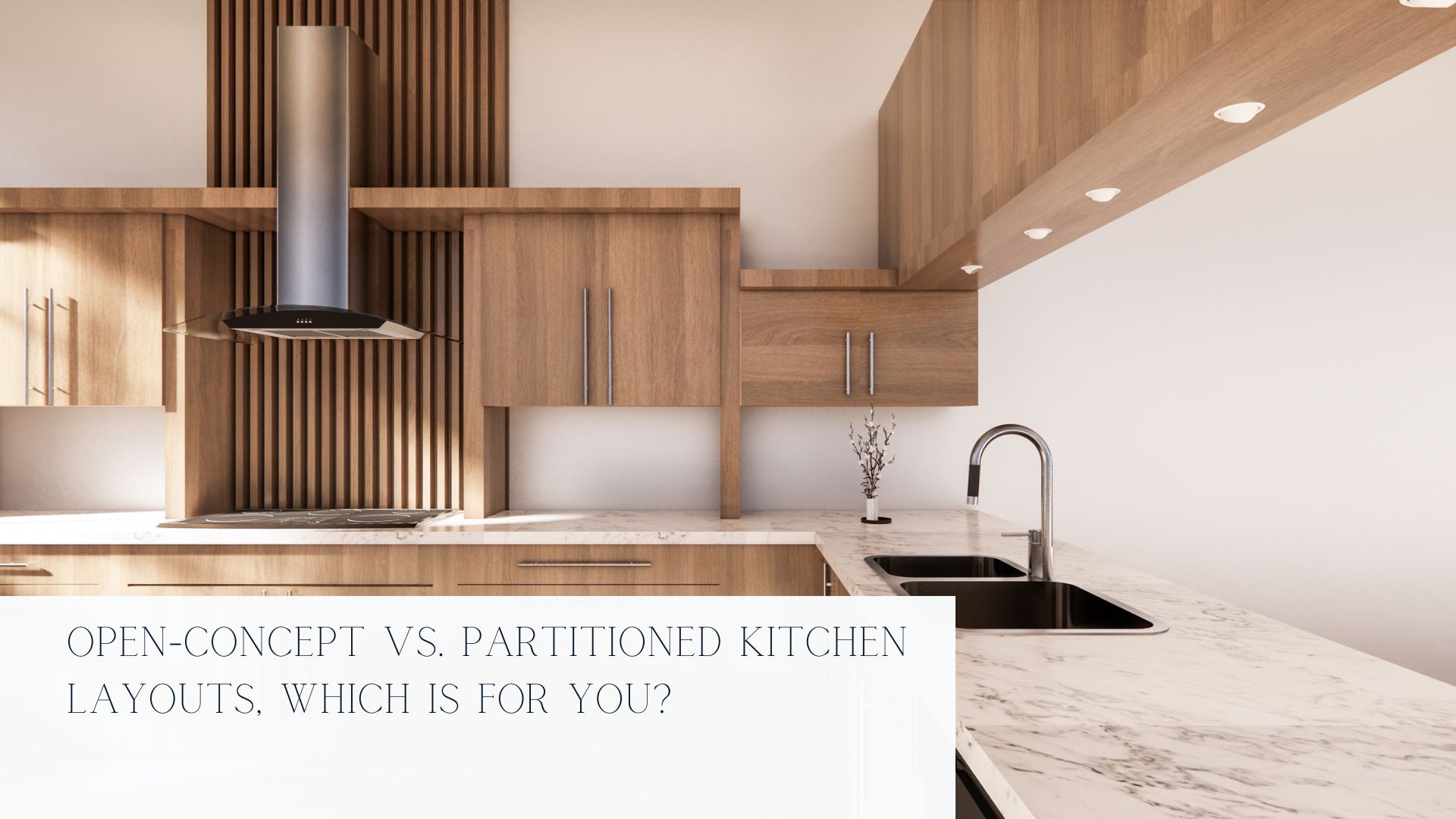
You are planning to revamp the layout of your kitchen, and you stumbled upon two popular, beloved layouts: open-concept kitchen and partitioned kitchen.
Now, you are confused about the advantages of one over the other. Worry no more, for we’ve got your back.
In this article, we will talk about these two kitchen layouts and which best fits your needs and style preferences. Let’s get started!
Kitchen Layout Trends in Singapore
Current Market Reality
Our preferences in kitchen design tell a compelling story about how we live and what we value in our homes.
Between 2012 and 2018, 70% of BTO flat buyers consistently chose open kitchens when given the option. From 2013 to 2017 alone, 87% of BTO projects offered open-concept designs.
This only meant one thing—that there’s an overwhelming layout preference which led HDB to standardise open kitchens in new developments and eliminated the optional partition walls that once cost S$370 to S$710 per unit.
However, the most revealing trend emerged more recently. According to Qanvast surveys of homeowners in Singapore, semi-open concepts have now become the most popular choice.
This approach suggests that fully open kitchens, even if beloved by many, have their fair share of challenges.
Why This Decision Matters
Your kitchen layout shapes your lifestyle. With our strong renovation culture, homeowners are investing in creating spaces that serve their needs.
The kitchen’s importance also increased with the shift toward work-from-home arrangements. Renovation budgets have increased 15-20% across the sector as homeowners recognise that their kitchens must now accommodate extended cooking sessions, informal video calls, and even children’s homework areas.
According to recent surveys,
- 45% renovate for lifestyle improvement
- 35% for property value appreciation
- 20% for personal expression
The kitchen layout you choose should serve whichever priorities matter most to your household.
Open-Concept Kitchen
What Defines an Open-Concept Kitchen
An open-concept kitchen eliminates walls between your cooking area and adjacent living spaces. There are no physical barriers separating you from family members in the living room or guests at the dining table.
You can watch television while cooking, supervise children doing homework, or chat with guests while preparing meals, all without walls interrupting sightlines or conversations.
The Advantages
Perception of Space
Every square foot matters psychologically as much as physically. Having an open-concept kitchen creates the illusion that your home is larger than its actual square footage.
The continuous sightlines trick our brains into perceiving more space. Without walls fragmenting your home into smaller compartments, the combined square footage of your kitchen and living area feels more generous than the same space divided.
Social Interaction
Instead of isolating yourself during meal preparation, you remain connected with family activities. Parents can supervise their children while cooking dinner. Couples can share their day while one cooks and the other relaxes nearby.
Rather than disappearing into the kitchen while the guests wait elsewhere, you remain engaged in conversations. Your cooking seamlessly becomes part of the entertainment. Easily host without sacrificing interaction.
Natural Light
Open concepts allow natural light to follow freely throughout your home. Light from living room windows reaches kitchen areas that might otherwise rely entirely on artificial lighting.
Natural light is abundant so it’s just right to maximise its distribution throughout your home to create brighter spaces. The psychological benefits of natural light extend to every hour you spend in your kitchen.
Ventilation
Open kitchens support better cross-ventilation because the air moves freely between spaces. Heat generated during cooking dissipates more quickly into the larger combined space rather than accumulating in an enclosed kitchen.
In short, open-concept kitchens would be a better option if you prioritise a comfortable cooking space in terms of air circulation.
Who Should Choose Open-Concept
Open-concept kitchens are for the following individuals and situations:
- Hosting people is a big part of your lifestyle
- Those who cook simple meals
- Those who dine out frequently
- Individuals avoiding heavy-duty cooking with strong-smelling ingredients
- Parents wanting to supervise their children as they cook
- Couples who prefer togetherness as they prepare meals
- Homeowners living in compact 3-room or 4-room units
Partitioned Kitchens
What Defines a Partitioned Kitchen
A partitioned kitchen, sometimes called a closed kitchen, is the layout that uses walls or substantial partitions to separate your cooking area from living and dining spaces.
Traditional closed kitchens usually feature a door, often left open during cooking but available for complete closure when desired.
The Advantages
Smells Stay Where They Belong
When you are frying fish, preparing curry, or cooking with belacan, these aromas are not easy to remove. But with a partitioned layout, they can be contained within your kitchen walls.
You prevent smells from settling into the fabrics, furniture, and soft goods in your living area. Your sofa won’t smell like last night’s sambal, and your curtains won’t smell like a combination of food aromas.
Noise Control
Kitchen activities generate various noises and sounds. Examples are running water, clattering dishes, chopping sounds, the sound of appliances, etc. Closed kitchens buffer these sounds from living areas where family members might be working, studying, or resting.
Early risers can prepare breakfast without waking sleeping family members. Or late-night cooking won’t disturb those trying to sleep.
Privacy
Closed kitchens offer private space for focused work.
Some people find cooking meditative and prefer doing it without anyone around. Others simply want freedom from the pressure of having to tidy the kitchen space immediately.
You control what is visible. For instance, you can let your guests see the finished dishes without them having to witness the messy space where you prepared them.
Maximising Storage
If you live in compact HDB units, storage capacity affects livability. Closed kitchens offer four walls worth of potential cabinet space.
You can install floor-to-ceiling cabinets on every available wall. Doing this maximises storage for your dishes, cookware, small appliances, and pantry items.
The sheer volume of cabinet space available in closed layouts surpasses what’s achievable in open configurations.
Temperature Control
Cooking generates significant heat. But this heat will be confined to the kitchen space if you opt for a partitioned layout. Your living room will remain unaffected by any cooking activity.
No Renovation Costs
For resale flats with existing closed kitchens, maintaining the current layout means no need for hacking. You would avoid the S$30 to S$710+ expenses (and several-week delays) associated with wall removal, not to mention permit applications and structural assessments.
You can use the money saved to invest in higher-quality cabinets, countertops and appliances.
Who Should Choose Partitioned Kitchens
This layout is for people who(se):
- Cook daily with strong spices and pungent ingredients
- View cooking as ‘me’ time
- Prefer focused, uninterrupted work in closed spaces
- Have extensive cooking equipment, large families, or big pantry
- Cooking style creates a messy kitchen
- Frequently have unannounced visitors and want to keep messy kitchens behind closed doors
Semi-Open Concept Kitchens, What About It?
Why It’s Been Popular
Recent surveys show that semi-open concepts are the preferred choice among homeowners in Singapore, and for good reason.
Semi-open designs offer one thing that neither of the two options we’ve discussed does. That is flexibility. With this style approach, you gain openness when you want interaction and connectivity, and at the same time closure when you need privacy and containment.
Design Option #1 – Glass Sliding or Bi-Folding Doors
The most popular semi-open solution is the installation of glass sliding panels or bi-fold doors between the kitchen and living spaces.
If you are cooking a meal with strong-smelling ingredients or just want to contain the mess, you can simply close the panels. The glass keeps sightlines open so you never feel completely isolated.
Some designs even conceal panels completely within wall pockets.
Design Option #2 – Half-Wall Plus Glass Combo
This structure combines a waist-height solid wall topped with glass panels or open space.
The lower wall’s functionality is focused on physical separation and you can house additional storage and countertop extensions.
The upper glass or open portion lets you have a visual connection to family members and guests, and also allows light to flow.
Design Option #3 – Pass-Through Windows
Pass-throughs work well for homeowners who want occasional separation and interaction at the same time.
Some designs include countertop extensions at pass-throughs, so you would be creating breakfast bars or serving areas that connect people while casually dining.
Design Option #4 – Swing Door with Vision Panels
Traditional swing doors can be propped open if you need openness and total closure whenever you need privacy. Modern versions of this design incorporate glass vision panels that still maintain some visual connection even when it’s closed.
You gain all the benefits of closed kitchens when doors are shut, as well as the advantages of open-concept kitchens when they are open.
How Do You Decide From Here?
Know that the perfect kitchen layout does not exist. What exists is the perfect layout that matches your cooking style, priorities and needs. Permit yourself to choose what works for you.
Even if this guide discussed details about open-concept kitchens, partitioned kitchens and the combination of the two, your situation calls for the guidance of professional interior designers.
You will discuss with them all factors that need to be considered, including your style preferences and household needs. Interior design firms such as Style + Space Interior Design bridge the gap between “I want my kitchen to feel spacious and functional” and actual floor plans, material selections, and construction details.
Ready to Begin Your Kitchen Transformation?
The journey from envisioning your ideal kitchen to actually cooking in it involves multiple, never-ending decisions, coordination, and execution. You don’t need to go through this alone, feeling overwhelmed.
The best interior designer in Singapore is someone who can properly guide you in building your dream kitchen. Partner with one today to begin the transformation your heart has been desiring.